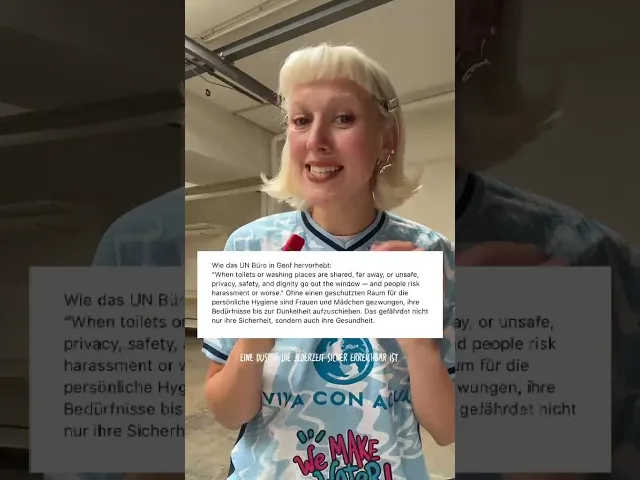
This week we are celebrating Menstrual Hygiene Day 2026 – one of the most important days of the year for our global project work. Why? Because for millions of people worldwide, menstruation is still associated with shame, exclusion, a lack of access to hygiene products, and educational inequality. Because periods must not be an obstacle to education, health, or self-determination. And because we can only create a period-friendly world together.
ONE DAY. MANY COMMUNITIES. ONE MOVEMENT.
Water is life. Water is dignity. Water is the beginning of everything.
Without water, there is no hygiene. Without water, there is no menstrual health. And without menstrual health, there is no equality. Water is the origin that connects everything – from education to health to self-determination. This is exactly why Viva con Agua champions WASH worldwide: clean water, sanitation, and hygiene.
For Viva con Agua, Menstrual Hygiene Day 2026 was more than just a day of action. It was a powerful demonstration of what is possible when people come together: for dignity, education, and a world where menstruation is not a taboo. Still, 696 million people worldwide lack safe access to clean water and hygiene products. We want to change that.
How water and menstrual health are connected
Menstrual health is directly linked to WASH:
Without clean water, girls cannot clean or dispose of menstrual products safely.
Without toilets, there is a lack of safe spaces to ensure hygiene during periods.
Without knowledge, shame and stigma persist.
That is why menstrual health is an indispensable part of our WASH work. Around Menstrual Hygiene Day 2026, our teams in Tanzania, Uganda, and South Africa showed how water, education, and awareness can bring about real change.
🇹🇿 Tanzania: Change begins with conversations
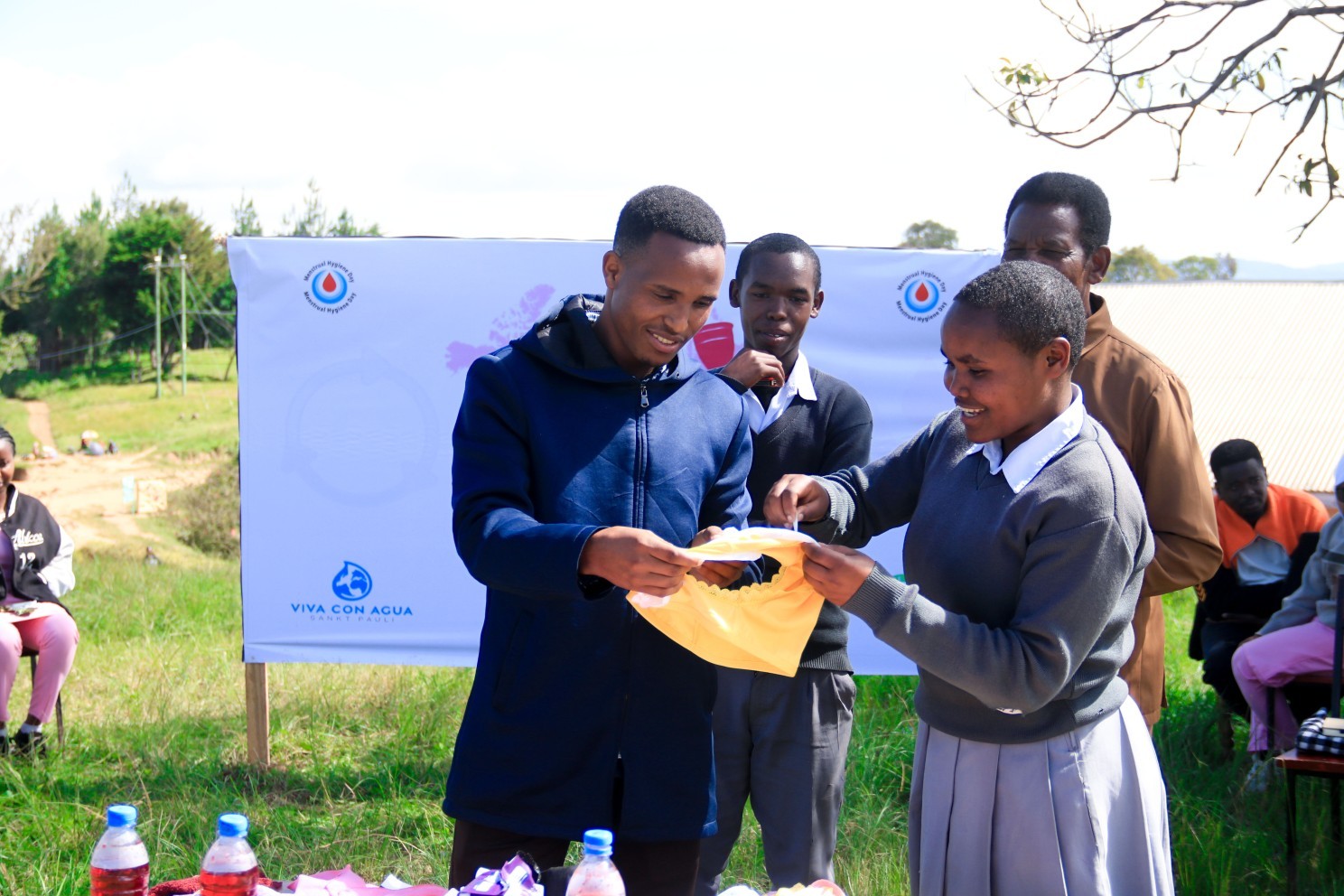
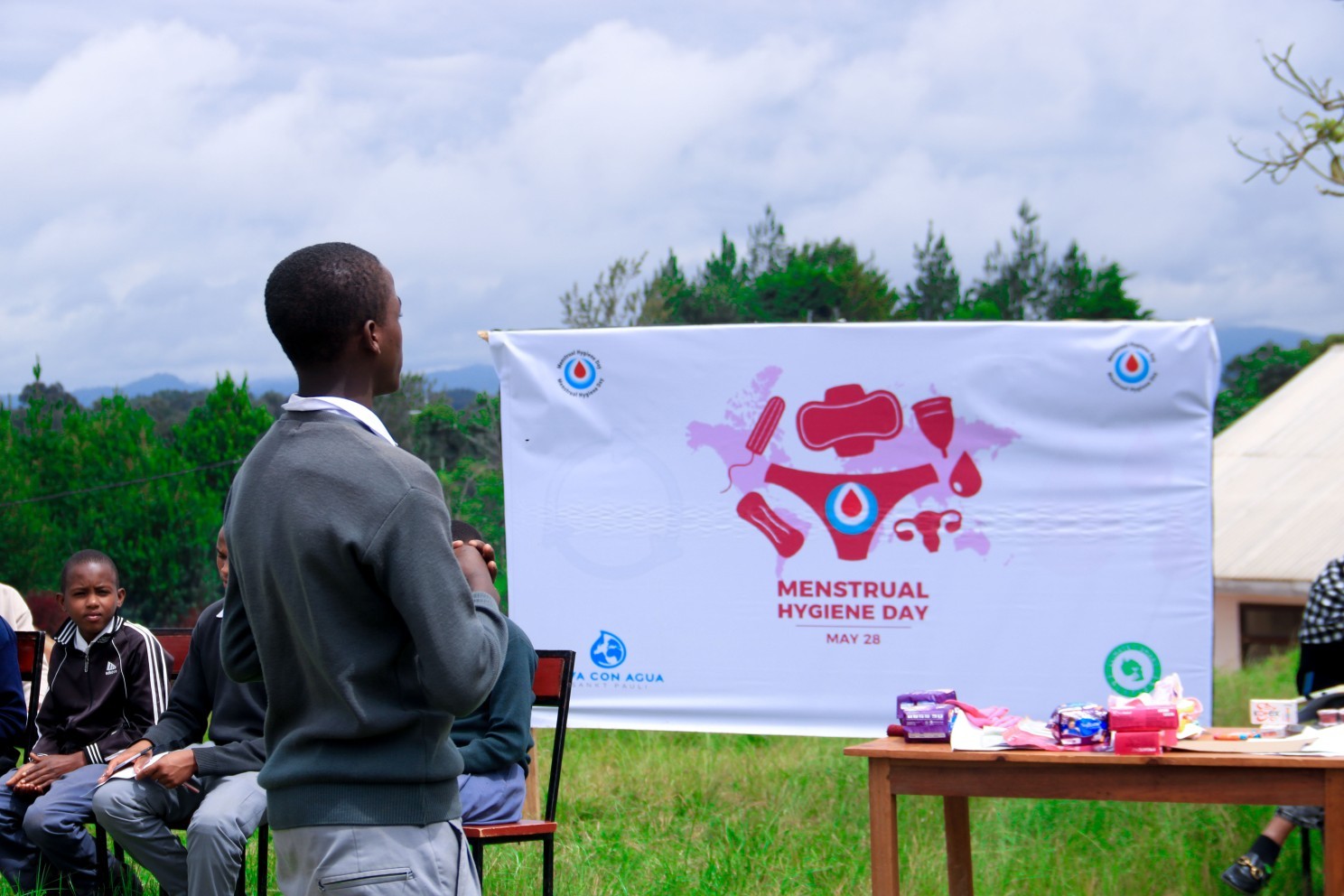
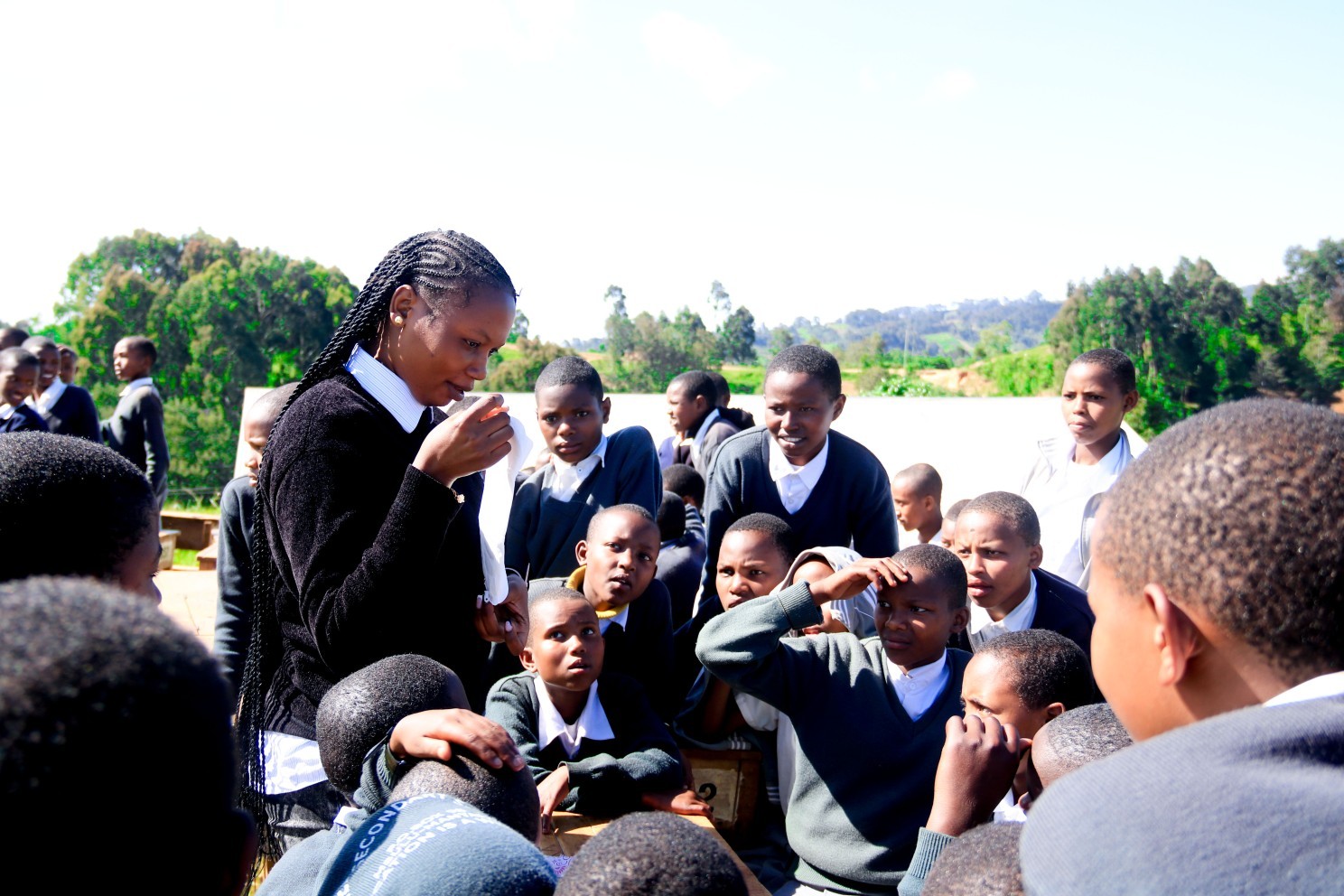
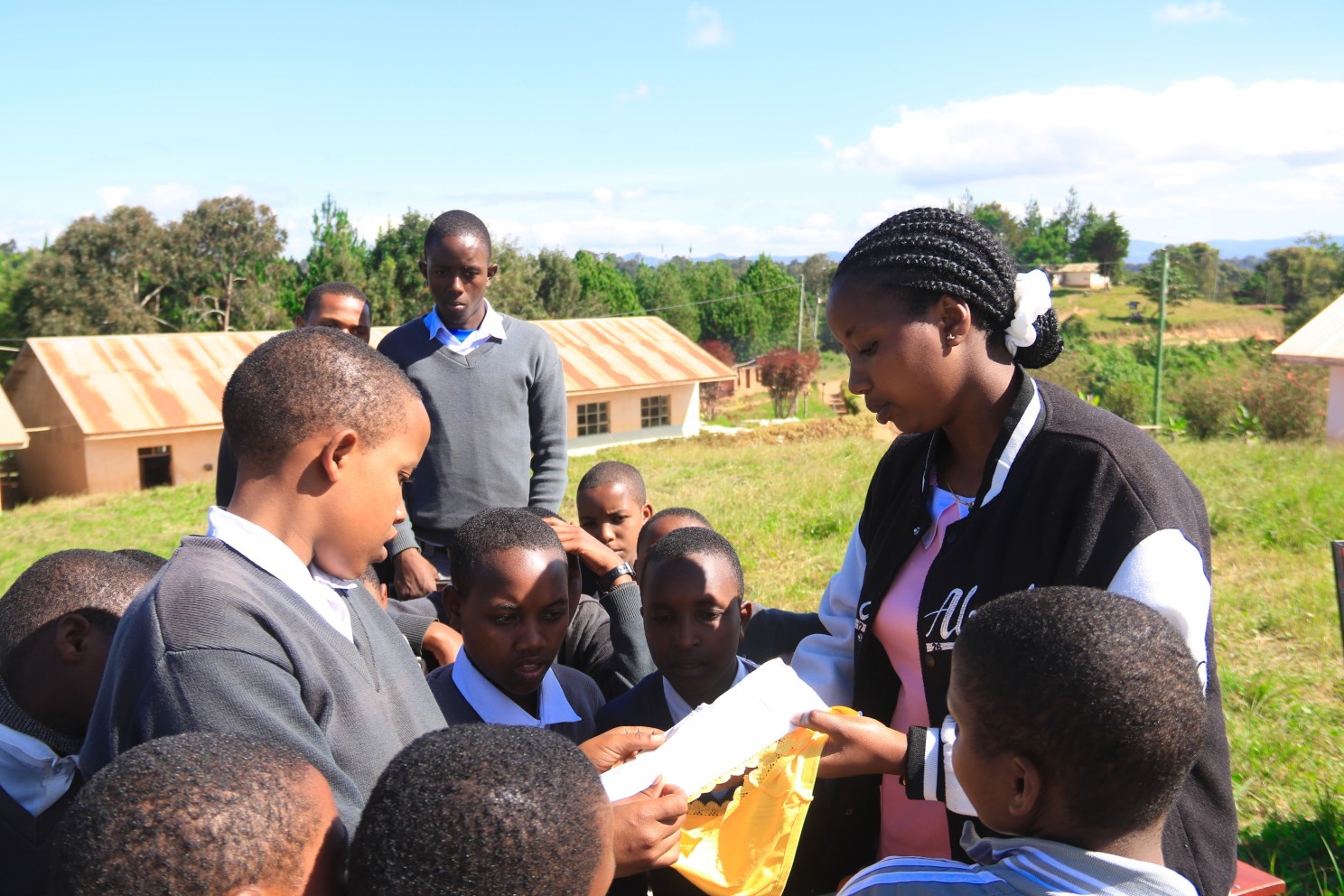
Together with our partner Climate Smart Solutions, Menstrual Hygiene Day took place at the Soheda Secondary School in Nahasey Village. More than 350 students, parents, and community members came together to speak openly about menstruation – a topic that is often shrouded in taboos.
Boys were actively involved in particular to show that menstruation is everyone's business. In debates, art projects, and practical sessions, spaces for openness and solidarity were created.
Highlights from Tanzania
School debates: „Menstruation is everyone’s responsibility“
Practical workshops on menstrual products
Community activities with students and parents
Art and storytelling for increased awareness
The result? Less shame, more dialogue, more dignity – and a strong sense of community.
🇺🇬 Uganda: Safe spaces through water and infrastructure
In Uganda, we celebrated at the St. Francis Primary School in Kabagezi, where Viva con Agua built a Menstrual Hygiene Management Changing Room in 2022. This safe space enables girls to manage their menstruation safely during the school day – a milestone for education and self-confidence.
Four years later, the focus was on the question: What is the long-term impact of a safe space? Alongside hygiene kits and workshops, conversations were held to better understand the impact.
Highlights from Uganda
Hygiene kits for 50 schoolgirls
Menstrual education for girls and boys
Personal stories on a „Wall of Encouragement“
Evaluation of how the changing room has improved educational opportunities
The realization: When water, education, and infrastructure come together, they generate not only hygienic but also real social changes.
🇿🇦 South Africa: Sport as a bridge to menstrual awareness
In Mpumalanga, South Africa, we celebrated Menstrual Hygiene Day with FC Augsburg and 400 students from John Mdluli Primary School. It was demonstrated here that sports can also feel like a safe space.
Through netball activities, conversations about menstrual health were opened in a playful way. Sport thus became a bridge for empowerment and solidarity – especially for young girls who are often affected by period poverty.
Highlights from South Africa
Netball and collaborative learning
Hygiene kits in Dignity Packs
Open conversations about menstruation
Youth empowerment through sports and WASH projects
Through this action, it became clear: water, hygiene, and empowerment belong together – and sport can be the starting point for great changes.
Thank you to our global community
None of this would be possible without the people who work every day for a better world. Thank you to all partner organizations, schools, teachers, activists, and communities who made Menstrual Hygiene Day 2026 possible.
You show that when people take action together, solutions are created. Taboos are broken. Spaces for dialogue are created. And the vision of a Period-Friendly World becomes a reality.
ALL IN FOR WATER. ALL IN FOR DIGNITY. ALL IN FOR A PERIOD-FRIENDLY WORLD.

Global Handwashing Day: Saubere Hände auf der ganzen Welt
Zum Global Handwashing Day zeigen Viva con Agua Indien, Südafrika, Uganda, Tansania und die Schweiz in unserem ersten internationalen Collab-Reel, wie sie den Tag gefeiert haben.
Mehr lesen

398 Kilometer, ganz viel Wasser und unzählige Begegnungen: Der WATER WALK 2026
Zwei Wochen zu Fuß von Kassel nach Hamburg. 14 Etappen. Ein gemeinsames Ziel: sauberes Trinkwasser für alle Menschen. Zum 20-jährigen Jubiläum von Viva con Agua haben wir den WATER WALK auf die Straße gebracht und erlebt, wie viel in Bewegung kommt, wenn Menschen gemeinsam loslaufen.
Mehr lesen

Jahresbericht 2025: 365 Tage All in for Water
Der Jahresbericht 2025 ist da! Er zeigt, was die Viva con Agua Community in einem Jahr voller Aktionen, Begegnungen und Geschichten gemeinsam erreicht hat: Über 158.000 Menschen wurden in unseren Projekten erreicht.
Mehr lesen
100 Karten, eine Lebensgrundlage: Unser neues Buch ist da!
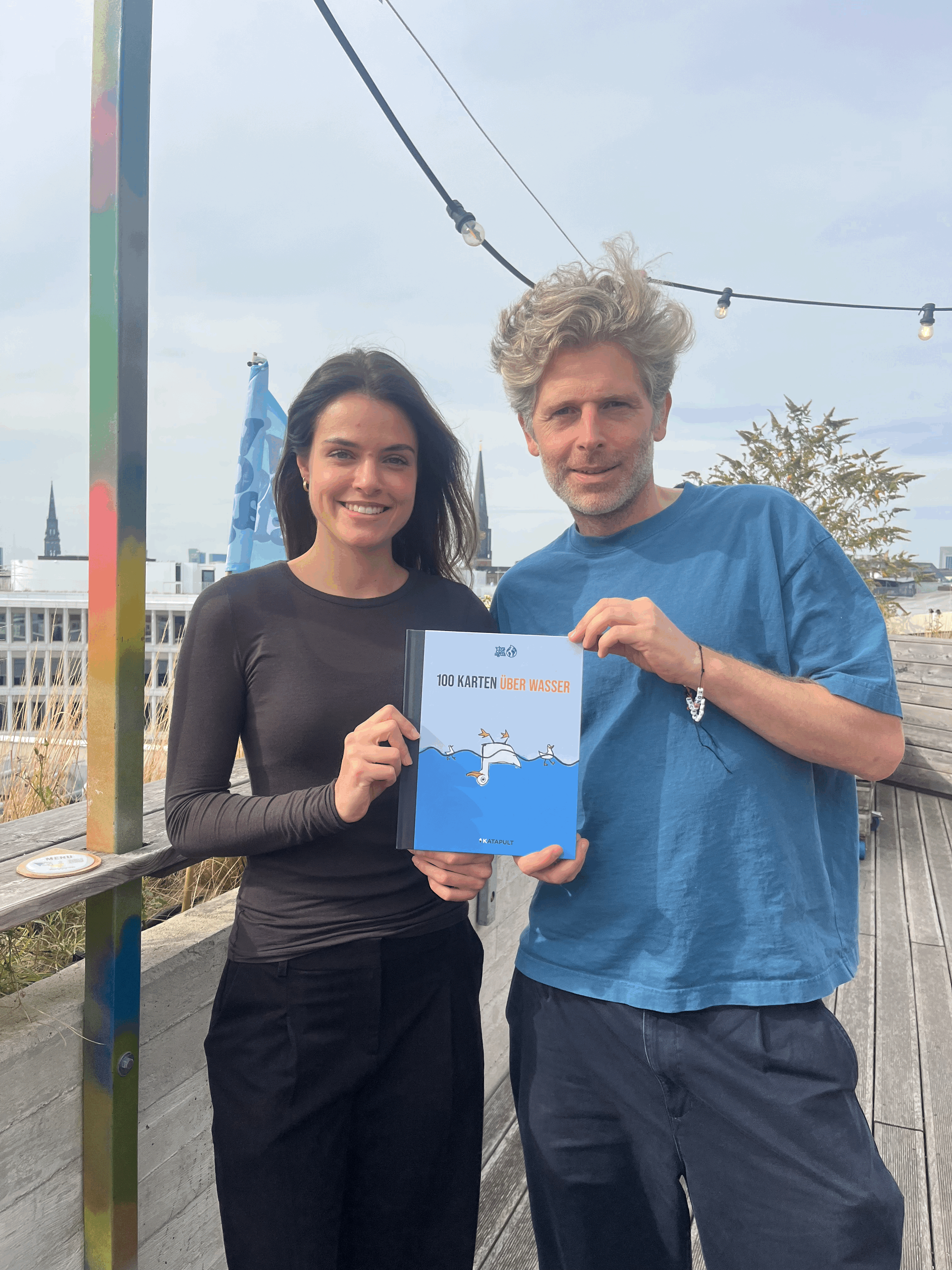
Was haben Fußball, Nebelfänger und Landesgrenzen eigentlich mit Wasser zu tun? Ziemlich viel. In unserem neuen Buch 100 Karten über Wasser, das gemeinsam mit dem KATAPULT Verlag entstanden ist, schauen wir aus 100 verschiedenen Perspektiven auf unsere liebste Lebensgrundlage.
Mehr lesen